
Crew training and familiarisation
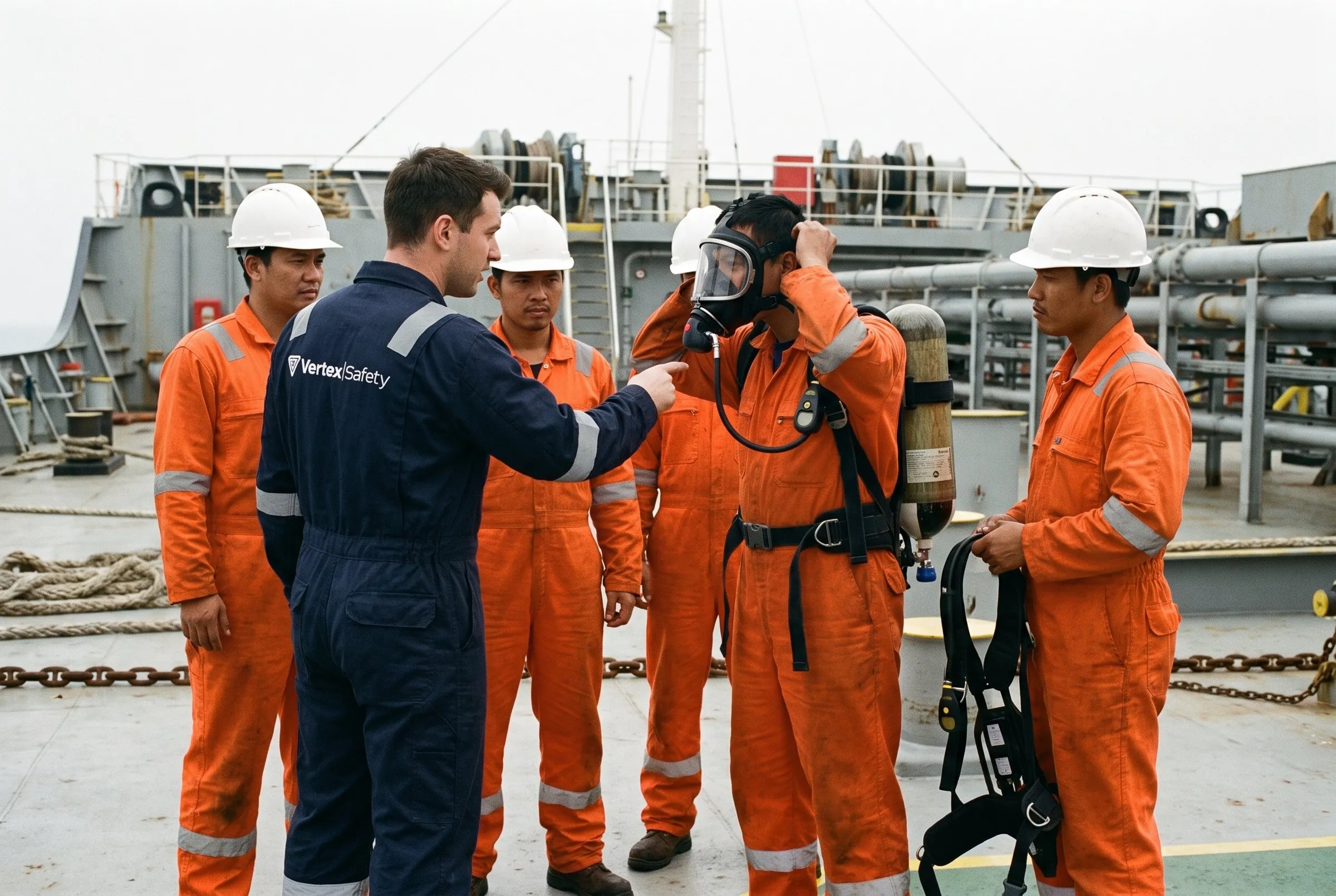
Practical sessions on board while our technicians are there anyway: breathing apparatus, gas detectors, lifeboat release gear and enclosed space entry.
Why it matters
Equipment is only as good as the person using it at three in the morning. The best moment to practise is while the technician who just serviced the gear is still on board.
We run short, practical sessions with your crew during the service visit, built around the equipment on that ship rather than a generic slide deck.
What we do
Scope of work
- 01
Breathing apparatus and EEBD
Donning, pre-use checks, reading the gauge and knowing what the warning whistle means.
- 02
Gas detectors
Bump tests, reading the alarms and testing an enclosed space in the right order.
- 03
Lifeboat release gear
How the on-load release works, the resetting procedure and the checks the crew should do before a drill.
- 04
Enclosed space entry
Permits, atmosphere testing and a rescue drill with the ship's own equipment.
What you get
- Attendance list for your training records
- Short notes on anything the crew should practise again
Rules we work to
- SOLAS III/19
- SOLAS XI-1/7
- MSC.1/Circ.1206/Rev.1
- ISM Code
References are summaries for planning. The current text of each instrument, your flag's interpretation and the maker's instructions always apply.
Often booked together
Request service
Book it for the next port call.
A vessel name, an IMO number and an ETA are enough to get a quote moving. Attach last year's certificates if you have them.