
Calibration and marine automation
Annual on-board tests of ODME, 15 ppm bilge alarms, oil mist detectors, level alarms and VECS, plus calibration of gauges, sensors, analysers and measuring instruments.
Why it matters
Alarms and monitors in the engine room and the cargo control room watch for oil in the water pumped overboard, oil mist in the engine crankcase, water rising in the bilges and tanks that are close to overflowing. Most of them stay quiet for months, so a regular test is how the crew knows they still respond at the right point.
Our technicians test them on board with the crew and calibrate gauges, sensors and analysers against reference instruments that carry their own valid calibration. The readings go on a certificate for each item, and the next due date sits in your portal with the rest of the ship's equipment.
What we do
Scope of work
- 01
Oil discharge monitoring equipment
Annual inspection and function test of the ODME on oil tankers: sampling and flushing arrangements, the oil content meter, the flow rate and ship's speed inputs, the overboard discharge control and the recording device.
- 02
Oily water separator and 15 ppm bilge alarm
Annual inspection of the oily water separator, with a function test and check of its 15 ppm bilge alarm, the automatic stopping of the discharge and the records the alarm keeps.
- 03
OWS effluent samples
Samples of the separator's outlet water taken on board and analysed in a laboratory for oil content, with the result for each sample in the report.
- 04
Oil mist detectors
Crankcase oil mist detectors tested to the maker's procedure: sampling lines, alarm level, and the alarm and slowdown signals sent to the engine control room.
- 05
High level and overfill alarms
Tank high level and overfill alarms tested one by one, from the sensor in the tank to the alarm in the cargo control room, the engine control room or on deck.
- 06
Bilge level alarms
Bilge level alarms in the engine room and other spaces tested at each switch, with the alarm confirmed on the ship's alarm and monitoring system.
- 07
Vapour emission control systems
Pressure sensors and the high and low pressure alarms of the vapour emission control system checked and calibrated, together with the system's oxygen monitor.
- 08
Inert gas and oxygen analysers
Oxygen analysers of the inert gas system calibrated with certified test gas and checked against their alarm settings. Fixed gas detection systems are calibrated under our gas detection service.
- 09
Cargo control room instruments
Gauges and remote indicators in the cargo control room compared with the readings on deck and with our reference instruments, and adjusted or reported where they differ.
- 10
Temperature sensors and gauges
Temperature gauges and sensors in the engine room and on cargo systems calibrated against a reference thermometer or temperature calibrator at several points across their range.
- 11
Pressure gauges
Pressure and compound gauges, manifold pressure gauges included, calibrated against a reference gauge or pressure calibrator, with the reading at each test point on the certificate.
- 12
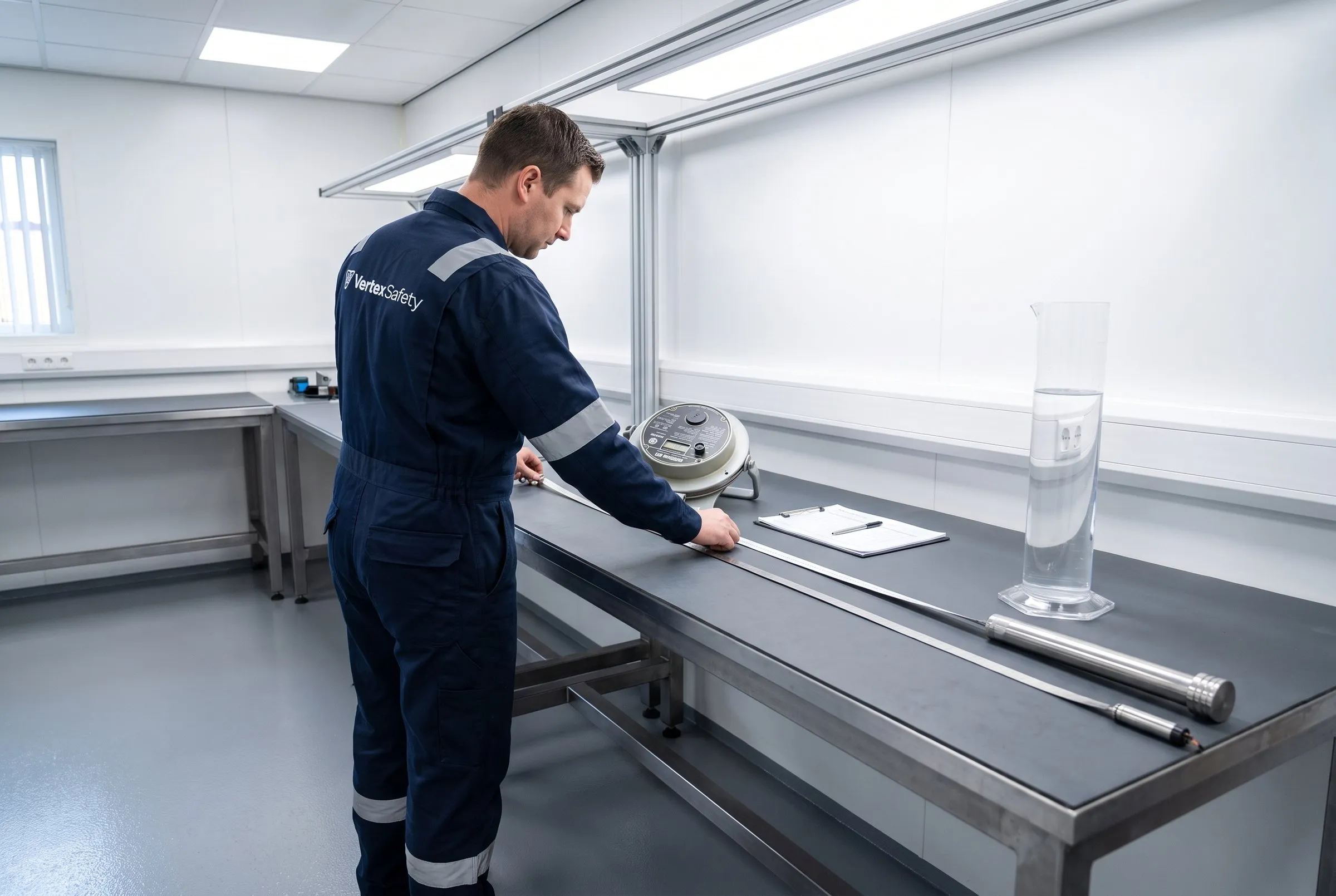
UTI, MMC and sounding tapes
Tape length against a reference tape, temperature and interface sensors, and the certificates terminals ask for.
- 13
Thermal imaging cameras
Fire team thermal cameras checked and serviced to the maker's procedure.
- 14
Calibrators and measuring instruments
Pressure and temperature calibrators and their hand pumps, dynamometers, torque wrenches, thickness gauges, barometers and density hydrometers compared against reference instruments, with certificates.
- 15
Welding gas installations
Oxy-acetylene distribution systems: regulators, flashback arrestors, hoses and cylinder stowage inspected, as vetting inspectors expect.
Intervals
When it is due
Typical intervals under the IMO instruments listed. Your flag, class or the maker's manual can ask for more; we check before we quote.
| Item | Interval | Basis |
|---|---|---|
| ODME test and 15 ppm bilge alarm check | Every 12 months | Company SMS |
| Oil mist detector, level alarm and VECS tests; calibration of gauges, sensors and analysers | Usually every 12 months, or as the maker and your SMS require | Maker, company SMS |
| UTI and sounding tapes | Usually every 12 months, or as charterers and terminals require | Maker, company SMS |
What you get
- Certificate per instrument or system with the readings taken and the reference instruments used, each with its own valid calibration
- Service report signed on board by the Master or Chief Officer
- Photos and plain notes on every unit that failed, with a quote for the fix
- Next due dates in your customer portal
Rules we work to
- MARPOL Annex I
- Res. MEPC.107(49)
- Res. MEPC.108(49)
- FSS Code ch. 15
- Maker procedures
References are summaries for planning. The current text of each instrument, your flag's interpretation and the maker's instructions always apply.
Often booked together


Request service
Book it for the next port call.
A vessel name, an IMO number and an ETA are enough to get a quote moving. Attach last year's certificates if you have them.