
Gas detection and calibration
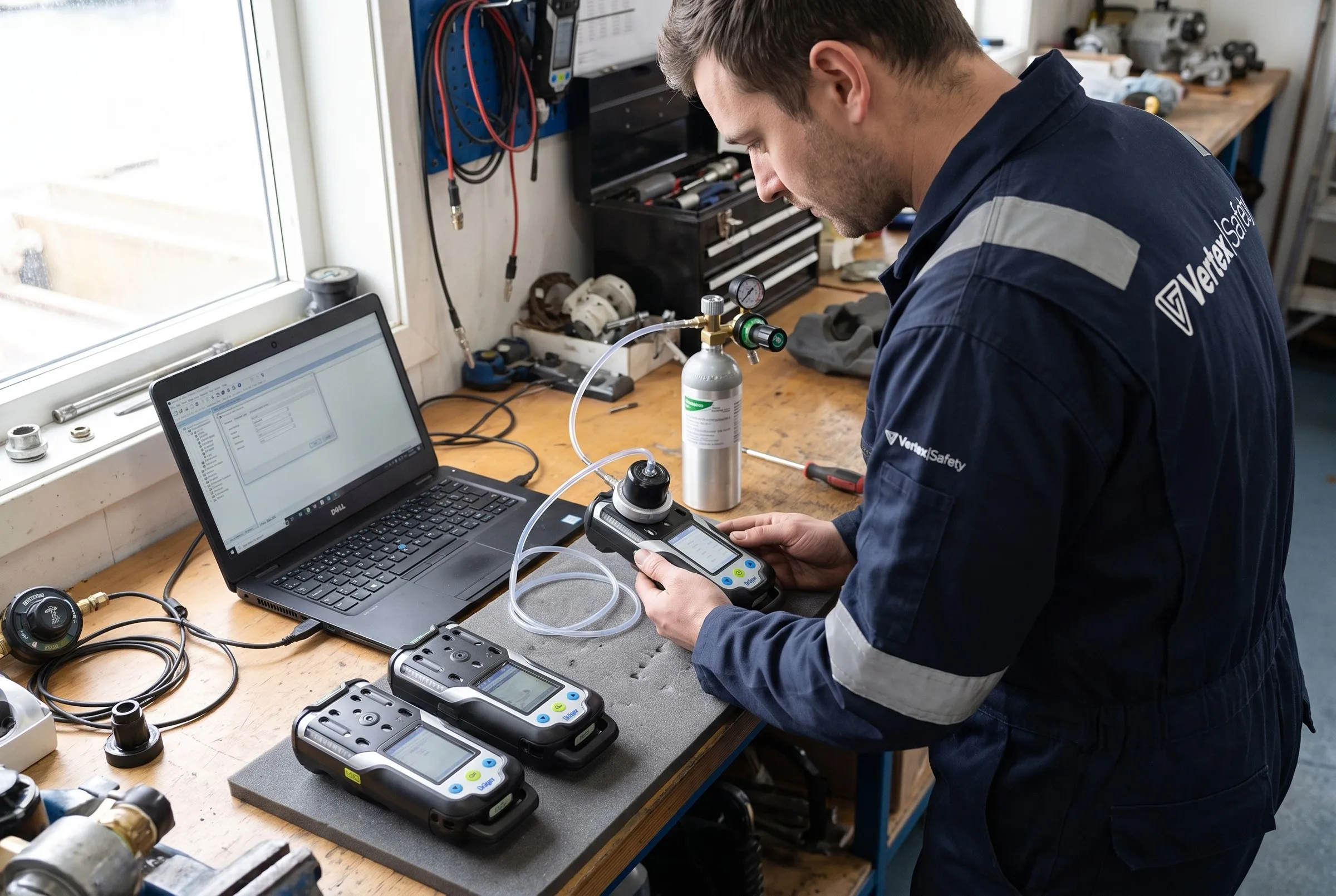
Calibration and repair of portable and fixed gas detectors with traceable calibration gas, plus supply of detectors, sensors and gas.
Why it matters
At least 1,010 people died in enclosed spaces on ships between 2000 and 2024, about 50 a year in recent years. A portable gas detector is often the only thing between a crew member and a bad decision, and a detector that is out of calibration gives a reading that looks reassuring and is wrong.
We calibrate with traceable gas, replace tired sensors before they fail, and give you certificates that match the serial numbers on board.
What we do
Scope of work
- 01
Portable detectors
Multi-gas and single-gas detectors for O₂, flammables, H₂S and CO (the SOLAS minimum), CO₂ as MSC.581(110) now recommends, and PID instruments for VOCs: calibration, sensor replacement and battery checks.
- 02
Fixed systems
Gas detection in cargo pump rooms, ballast and void spaces, refrigerant and CO₂ leak detection: sensors, sampling lines and alarms.
- 03
Calibration gas
Certified calibration gas cylinders supplied and their expiry dates tracked.
- 04
Instrument selection
Advice on the right instruments for your cargoes and enclosed spaces when replacing or adding detectors.
Intervals
When it is due
Typical intervals under the IMO instruments listed. Your flag, class or the maker's manual can ask for more; we check before we quote.
| Item | Interval | Basis |
|---|---|---|
| Portable detector calibration | As the maker specifies, usually every 6 months or more often | Maker, MSC.1/Circ.1561 |
| Bump test by the crew | Before each use or each day's use, as the maker specifies | Maker, company SMS |
| Enclosed space entry and rescue drill, using the instruments | At least every 2 months | SOLAS III/19 |
| Fixed gas detection systems | As the maker and class require; many makers ask for checks every few months and calibration at least once a year | Maker, class |
What you get
- Calibration certificate per instrument with gas lot numbers
- Service report signed on board by the Master or Chief Officer
- Photos and plain notes on every unit that failed, with a quote for the fix
- Next due dates in your customer portal
Rules we work to
- SOLAS XI-1/7
- SOLAS III/19
- MSC.1/Circ.1477
- MSC.1/Circ.1561
- Res. MSC.581(110)
- SOLAS II-2/4.5.10
- IGC Code
- IBC Code
References are summaries for planning. The current text of each instrument, your flag's interpretation and the maker's instructions always apply.
Often booked together



Request service
Book it for the next port call.
A vessel name, an IMO number and an ETA are enough to get a quote moving. Attach last year's certificates if you have them.