
Medical oxygen and resuscitators
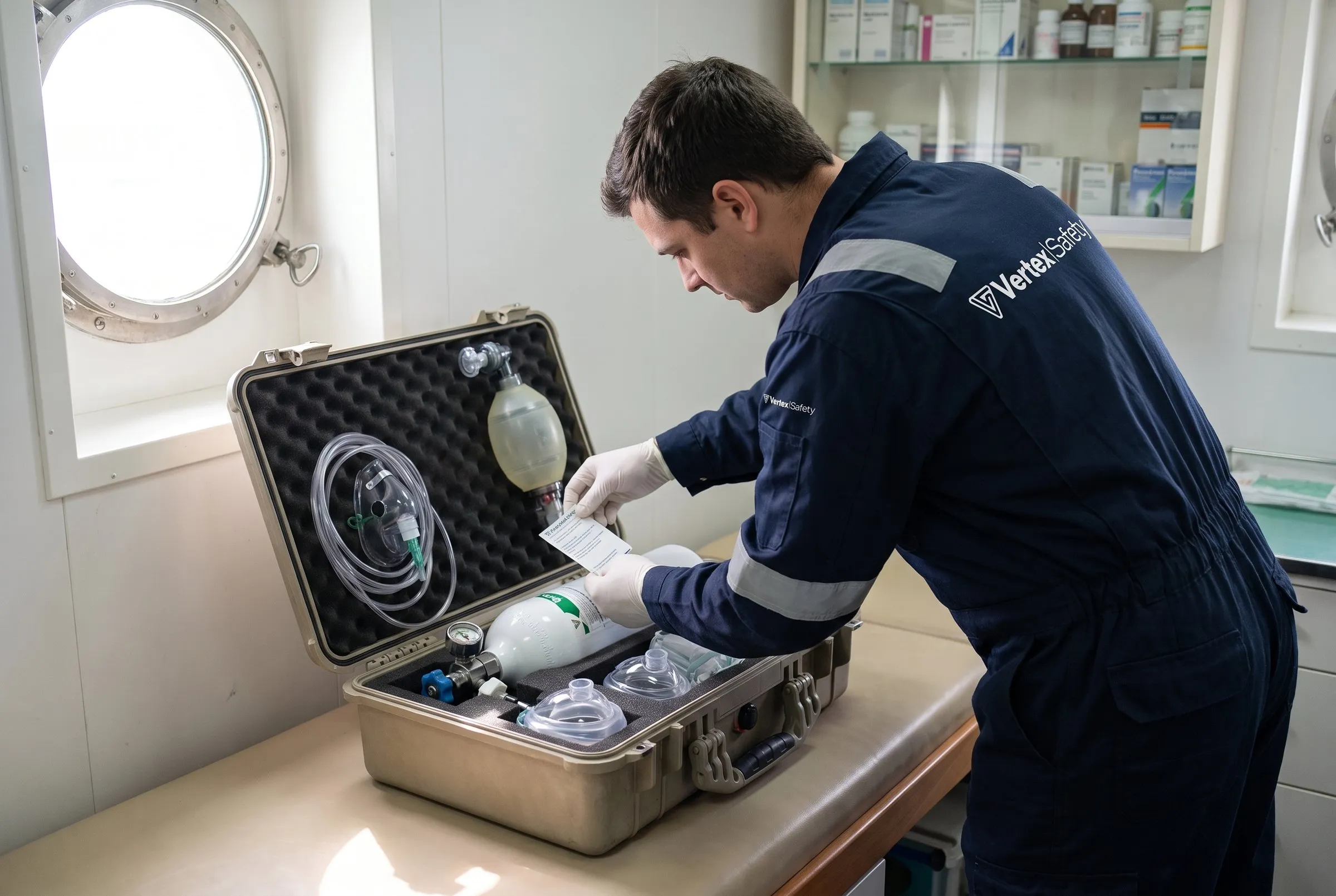
Inspection, refilling and exchange of medical oxygen sets and resuscitators, and checks of the ship's medical equipment and stores.
Why it matters
When a crew member stops breathing, there is no time to look for a regulator that works. Oxygen sets sit in the hospital for years and are only opened when they are needed.
We check them properly, keep the cylinders in date and help you keep the medical chest in line with your flag's list.
What we do
Scope of work
- 01
Oxygen resuscitator sets
Regulator, flow, masks, tubing, cylinder pressure and test date checked; worn parts replaced.
- 02
Cylinders
Refilling or exchange with medical oxygen, and hydrostatic testing when due.
- 03
Medical equipment
Defibrillator pads and batteries, and other hospital equipment checked for expiry.
- 04
Medical stores
Medical chest contents checked against the flag's list, with a supply of what is missing or expired.
Intervals
When it is due
Typical intervals under the IMO instruments listed. Your flag, class or the maker's manual can ask for more; we check before we quote.
| Item | Interval | Basis |
|---|---|---|
| Medical oxygen set inspection | 12 months, or as the flag requires | Flag, maker |
| Medical chest inspection | As the flag requires, usually every 12 months | MLC 2006 Reg. 4.1, Directive 92/29/EEC |
What you get
- Inspection certificate for each oxygen set
- Medical chest checklist with expiry dates
- Photos and plain notes on every unit that failed, with a quote for the fix
- Next due dates in your customer portal
Rules we work to
- MLC 2006 Reg. 4.1
- Council Directive 92/29/EEC
- International Medical Guide for Ships
- Flag requirements
References are summaries for planning. The current text of each instrument, your flag's interpretation and the maker's instructions always apply.
Often booked together




Request service
Book it for the next port call.
A vessel name, an IMO number and an ETA are enough to get a quote moving. Attach last year's certificates if you have them.