
Fire detection and alarm systems
Detector-by-detector testing of fire detection and alarm systems, sample extraction systems, panel checks, fault finding and spares.
Why it matters
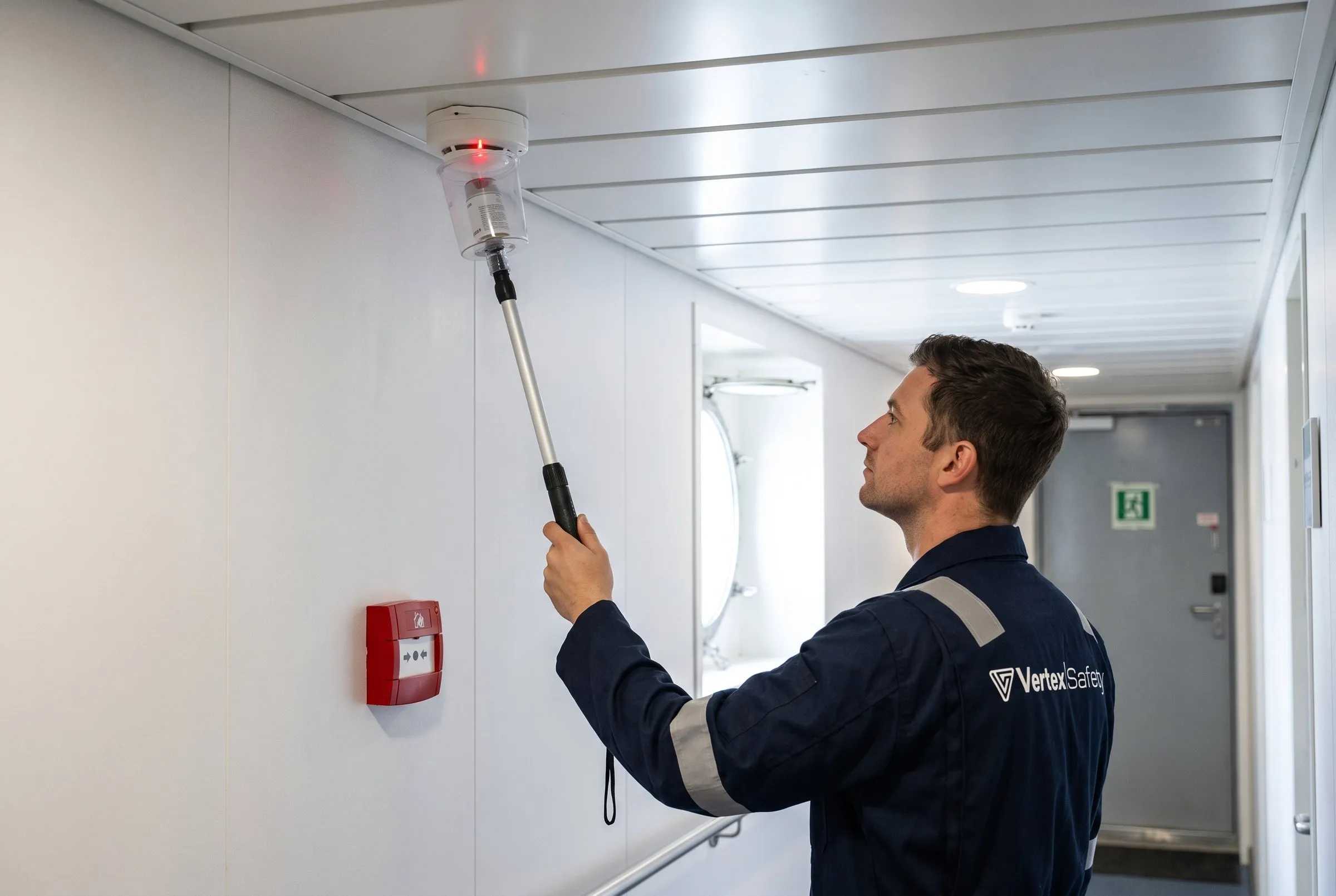
A detector that does not see smoke is worse than none, because everyone trusts it. Testing them one by one is slow work, which is exactly why it gets skipped.
We test every detector and call point, read the panel's history and fix the faults, so the system is something the crew can rely on rather than learn to ignore.
What we do
Scope of work
- 01
Detectors
Smoke, heat and flame detectors tested with the right test tools, not a lighter.
- 02
Manual call points and alarms
Call points, sounders and beacons, and the general alarm interfaces.
- 03
Control panel
Batteries, earth faults, power supplies, fault and isolation logs.
- 04
Linked functions
Fire door release, ventilation stops and other functions driven by the system, as installed.
- 05
Sample extraction systems
Suction, flow indication and accumulators in cargo hold smoke detection systems.
- 06
Repairs
Fault finding, replacement detectors and spares.
Intervals
When it is due
Typical intervals under the IMO instruments listed. Your flag, class or the maker's manual can ask for more; we check before we quote.
| Item | Interval | Basis |
|---|---|---|
| Testing of fire detection and alarm systems | 12 months | MSC.1/Circ.1432, FSS Code ch. 9 |
| Sample extraction smoke detection | 12 months | MSC.1/Circ.1432, FSS Code ch. 10 |
What you get
- Test record listing every detector and call point by loop and address
- Certificate of Inspection per equipment type, with a QR code anyone can verify
- Service report signed on board by the Master or Chief Officer
- Photos and plain notes on every unit that failed, with a quote for the fix
- Next due dates in your customer portal
Rules we work to
- SOLAS II-2/7
- FSS Code ch. 9 and 10
- MSC.1/Circ.1432
References are summaries for planning. The current text of each instrument, your flag's interpretation and the maker's instructions always apply.
Often booked together

Request service
Book it for the next port call.
A vessel name, an IMO number and an ETA are enough to get a quote moving. Attach last year's certificates if you have them.