
Harnesses and fall protection equipment
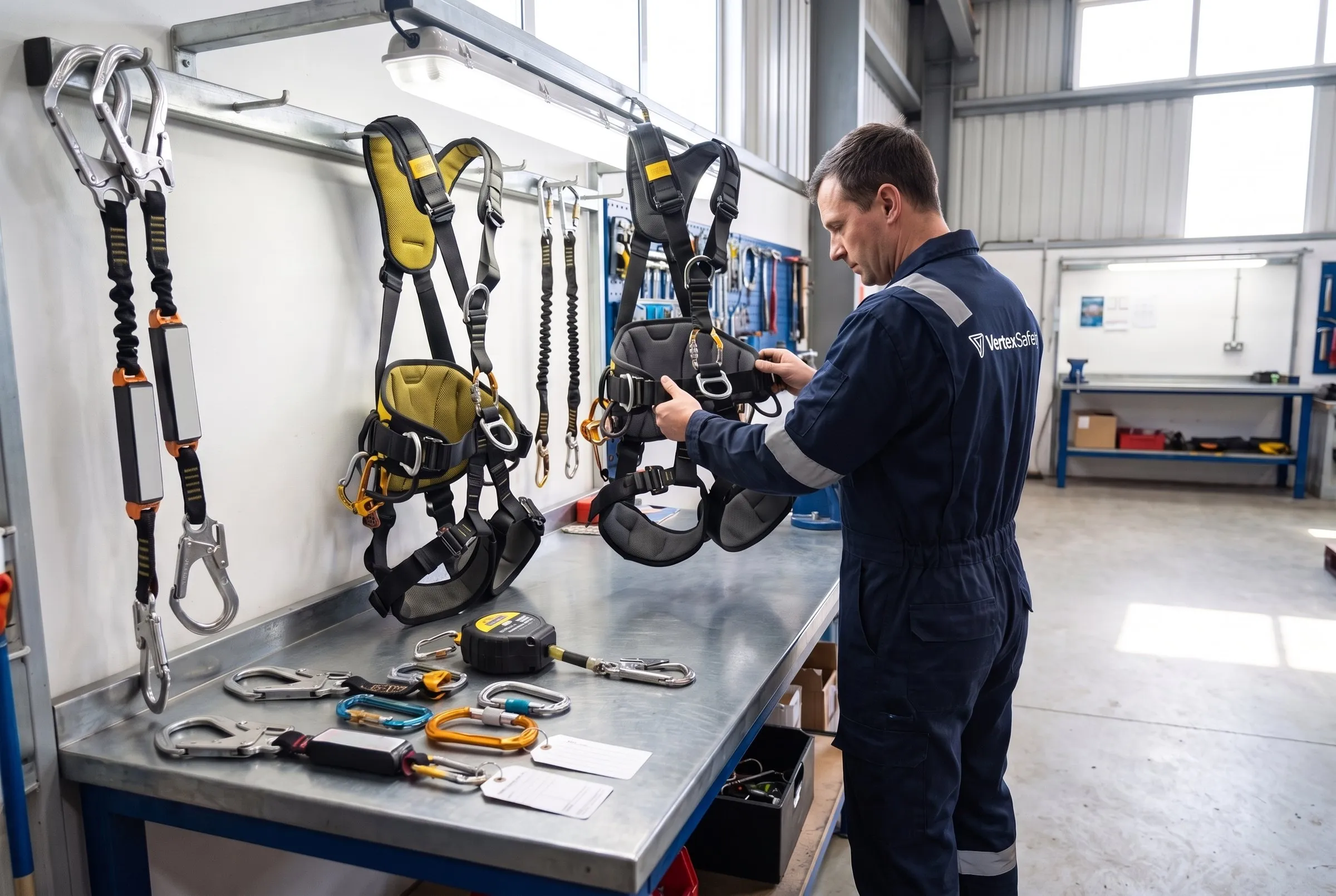
Periodic examination of harnesses, lanyards, fall arresters and self-retracting lifelines, with a tag and a record for every unit.
Why it matters
Harnesses are used for work aloft, over the side and in cargo holds, and they wear out in sun, salt and paint. Webbing, stitching and shock absorbers can look fine and still fail.
An examination by a competent person at least once a year keeps the equipment trustworthy and gives auditors a record per unit.
What we do
Scope of work
- 01
Harnesses and lanyards
Webbing, stitching, buckles, D-rings and energy absorbers examined; units that fail are withdrawn and tagged.
- 02
Fall arresters and retractable lifelines
Function and locking tests, housings and lines checked, maker service arranged when due.
- 03
Rescue equipment
Tripods, winches and rescue lines kept for enclosed space rescue.
- 04
Records
Each unit listed by serial number with its examination date and result.
Intervals
When it is due
Typical intervals under the IMO instruments listed. Your flag, class or the maker's manual can ask for more; we check before we quote.
| Item | Interval | Basis |
|---|---|---|
| Periodic examination of personal fall protection equipment | At least every 12 months | EN 365 |
What you get
- Examination certificate per unit
- Inspection tag on every harness and lanyard
- Photos and plain notes on every unit that failed, with a quote for the fix
- Next due dates in your customer portal
Rules we work to
- EN 361
- EN 355
- EN 360
- EN 365
- ISM Code
References are summaries for planning. The current text of each instrument, your flag's interpretation and the maker's instructions always apply.
Often booked together



Request service
Book it for the next port call.
A vessel name, an IMO number and an ETA are enough to get a quote moving. Attach last year's certificates if you have them.